Showing posts with label bugs. Show all posts

Wednesday, May 26, 2010

Invasion 2010

Well it's about time my garden was invaded by unnamed and unknown beasties hell-bent on crushing my gardening bravado yet again. It started with a teeny-tiny tomato hornworm a few weeks ago, but I knew that meant it was time to whip out my BT and put the beat-down on them. It was my own fault for feeling so confident in my killing abilities.

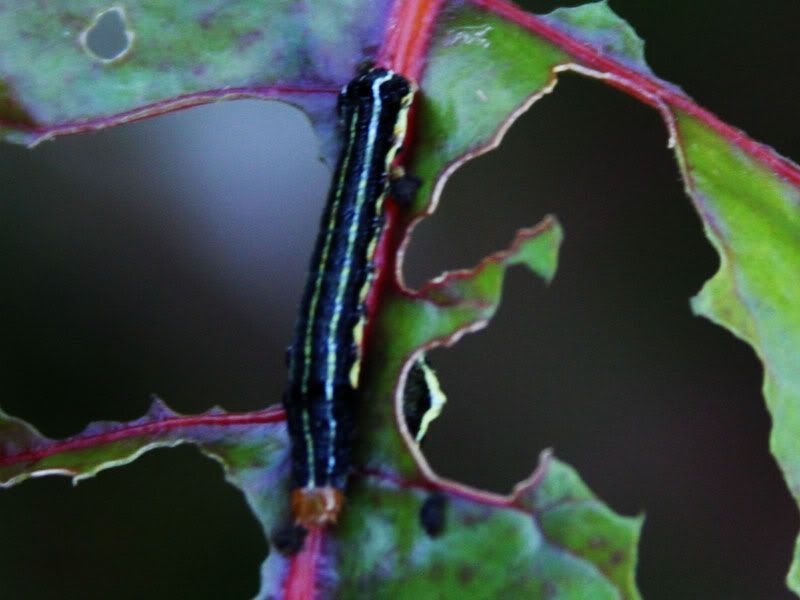
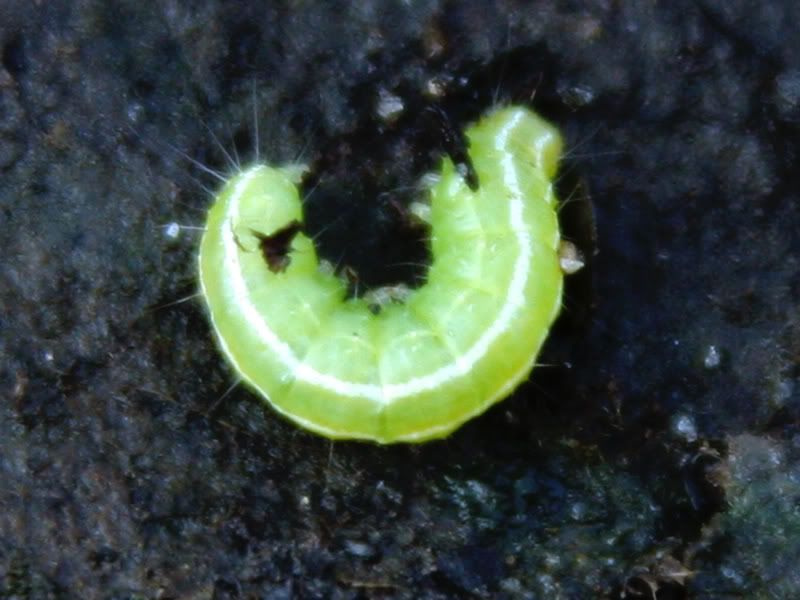
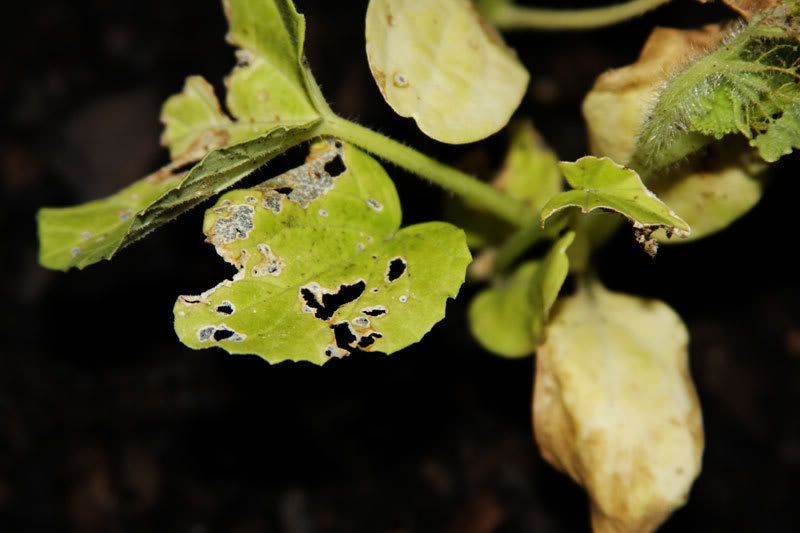
Because not soon after I noticed that my will-never-be-edible-since-they-bolted-instantly-due-to-heat cauliflower and broccoli plants were holey as could be. I searched the plants and under a few of the leaves I found tiny green wormy bugs. Shudder. I hate that I have a bit of a bug phobia, but worms are the worst thanks to too many TLC specials about humans as parasitic hosts (Farmer B won't let me watch those shows anymore, which is irrelevant since I scream when I even see the previews). I decided to spray the BT again since these appeared caterpillar-like and BT is the caterpillar kill-all in my books.
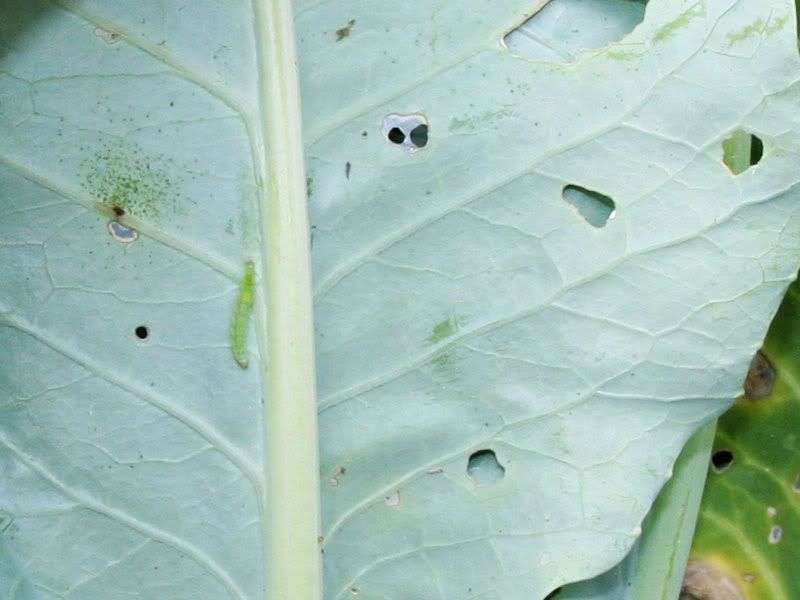

Again, feeling like a cocky killing machine.

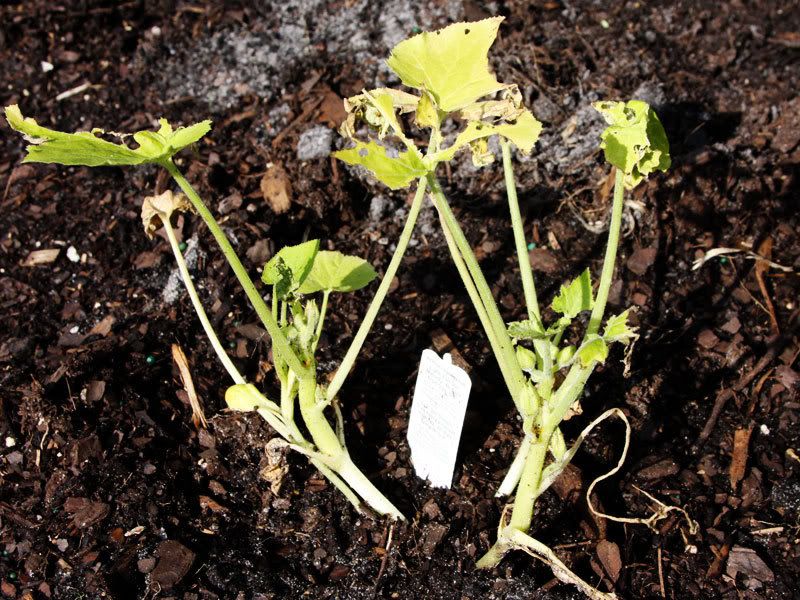
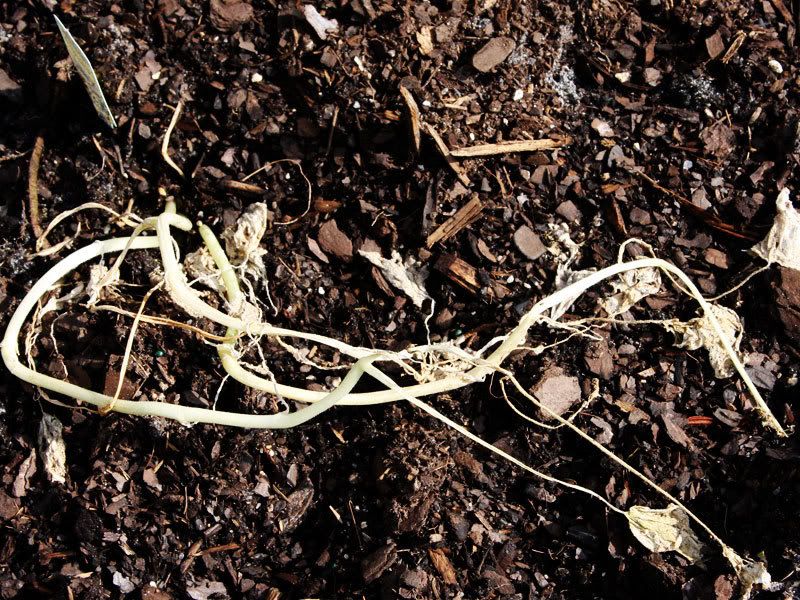
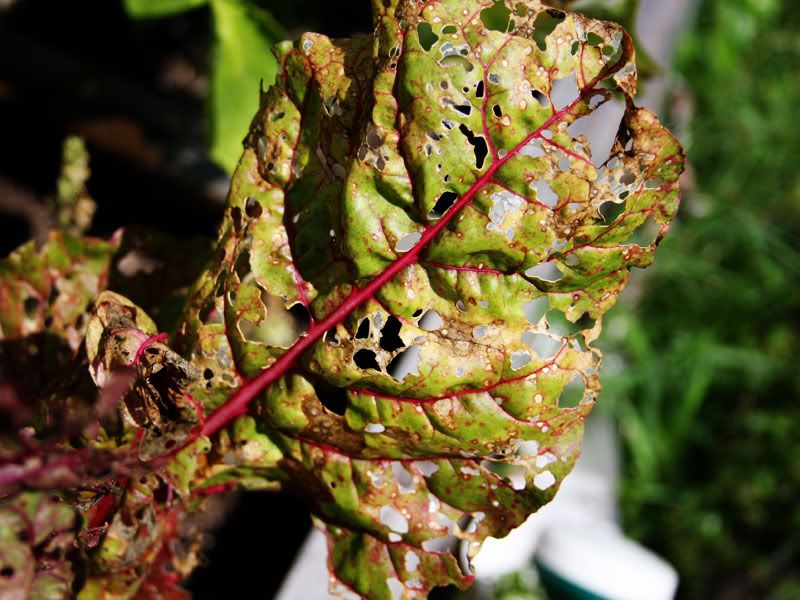
Then dammit if I didn't go out there and notice my Swiss Chard had turned to Swiss Cheese AGAIN! This happened before in the garden and last time the culprit was armyworms (or so my gardening blogger friends told me). This time I didn't see any worms, but I suppose they could have been hiding. I am not sure how to go about killing them, so each day I have more holes and less chard.

And let's not forget the red ants that killed my green peas, but that's in the past.

Then a couple of days ago I'm out in the garden with that older boy of mine and we're harvesting some green beans for dinner when he starts eyeing up my potato plants and asking me when we can eat the potatoes. I told him I think the leaves start to yellow or something when the potatoes are ready. He said "Well I hope we get to eat them before all these bugs do"
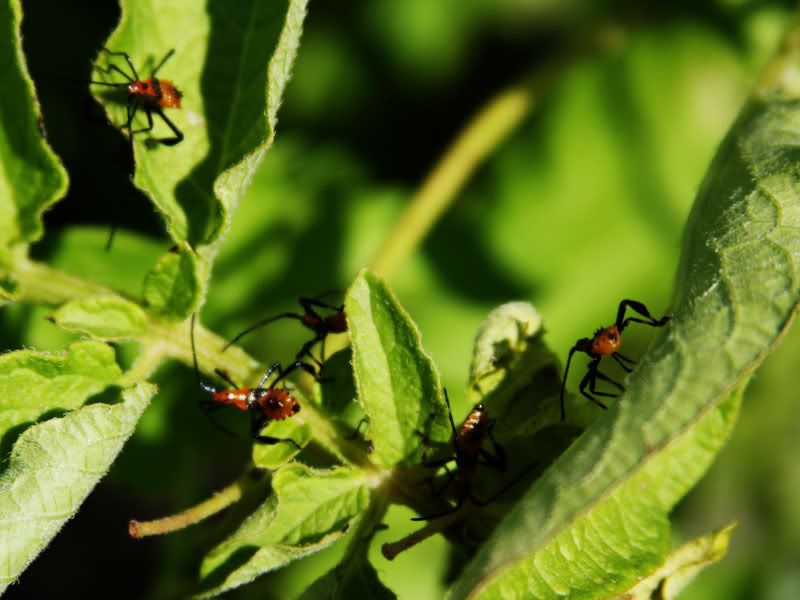

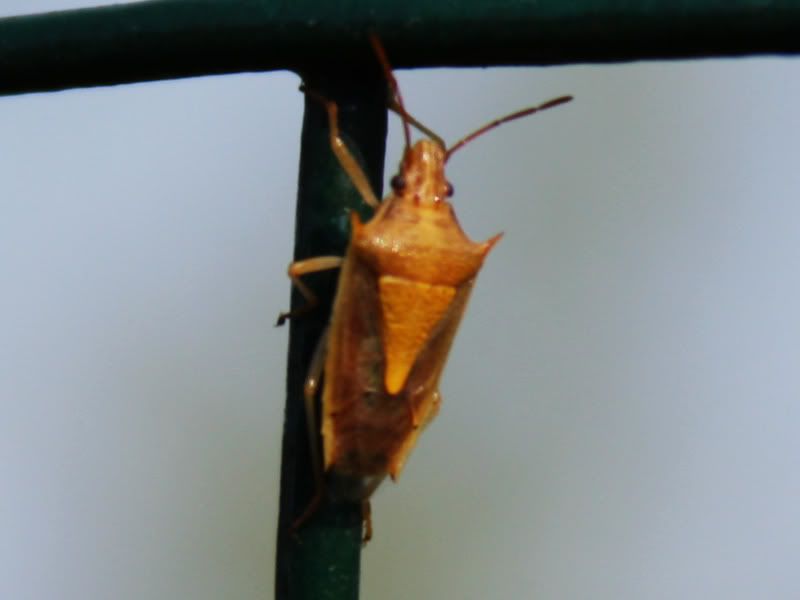
WHAT? And there on the leaves of my potato plants were all of these orange leggy insects just making themselves at home. I did what I always do when I encounter a new bug - get a big case of the willies, then run inside and open up my Organic Pest Control book and try to identify the bug. The best part about that experience is that the gross-out factor of turning page after page of wriggly vile bugs is off the charts and I have yet to identify one bug from the book. This is confounded by the fact that bugs mutate constantly - you have to look at the egg, larvae, juvenile and adult photos for each and every writhing multi-legged creature. And this time was no different - nothing in there looked like these bugs.

So I was left wondering - should I kill them? Are they good bugs? Are they evil bugs? How do I kill them? So I found a bottle of Garden Safe Fruit and Vegetable insect killer spray that I've had for a couple of years and never used and went running out to the garden with it. It says "kills instantly" on the label, so I figured I'd use it and hope these weren't good bugs. I sprayed every last one of them and nothing happened. They even looked angrier and stronger an hour or so later. So if they were good bugs, I did them no harm. If they were bad bugs, I'm screwed.

Apparently I am not prepared for the invasion. I'm taking a big, fat mental note of this.

Saturday, March 6, 2010

Wildlife Weekend :: The Broccoli and the Bees

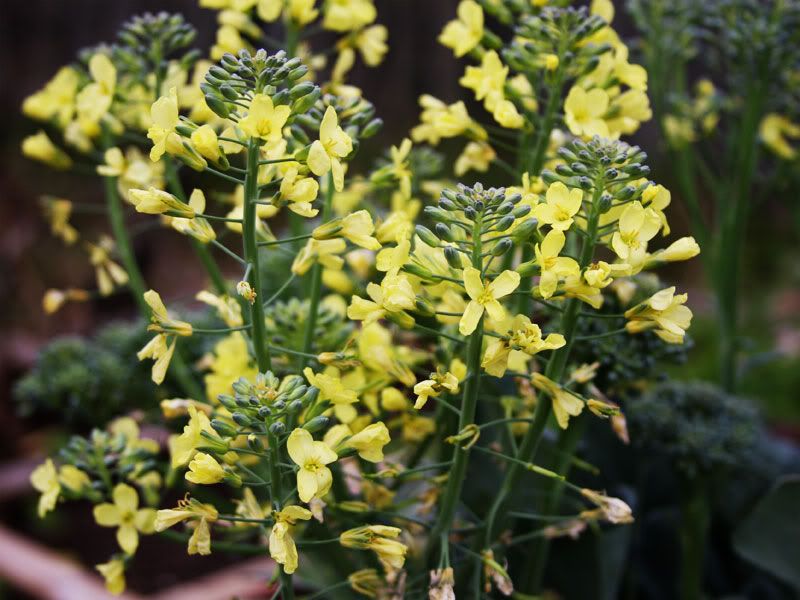
I accidentally let my big broccoli plant flower in February. I don't really go outside when temperatures dip into the 30s and 40s, so before I knew it my broccoli plant was a mess of yellow blooms and all I could do was watch from my heated living room. I knew there was no way to prevent it from blooming without braving the insanely cold temperatures and possibly slipping into a hypothermic coma...so I just let it happen.


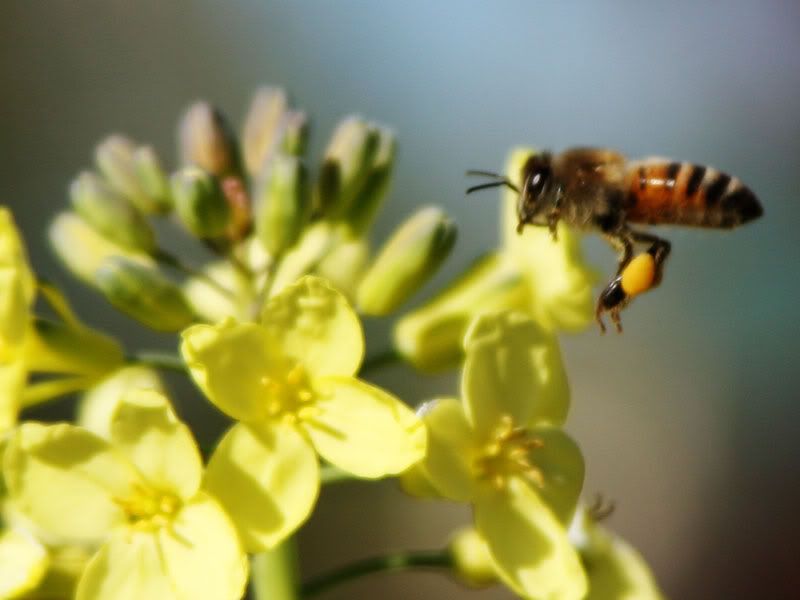
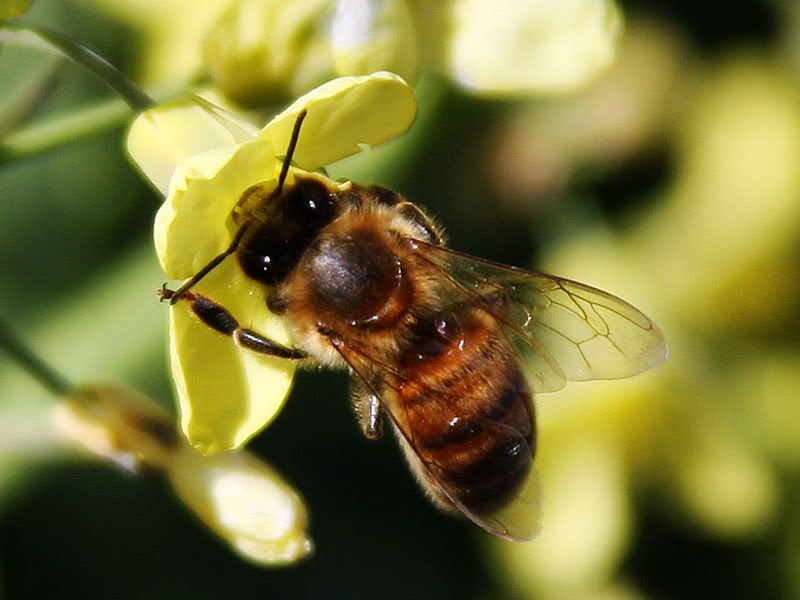
When I finally did venture outside I noticed that the plant was alive with bees. At one point I counted over 20 bees on it going from flower to flower in a mad rush to get as much nectar as possible from the only flowering thing around.


I figured the rest of the garden was pretty much dead so the least I could do was let this flowering broccoli thrive to feed this mass of bees. It lasted for a good month before it wilted and the bees went away.


I then yanked it out and tossed it in the compost. It was definitely great while it lasted though - the bees seemed happy to have something to buzz around in this insanely cold winter. And I enjoyed watching them.

Friday, November 20, 2009

The Swiss Chard tasted GREAT!

This week has been one of those busy weeks that involved moms brag about. Turns out I had an event at my son's school every single day this week. From volunteering at the book fair to going into the classroom and making sugar-cone cornucopias with the kindergarteners, it's just been a crazy-busy week. Because I had such a busy week I didn't get a chance to go out to the garden all week, but the weather has been mild and it appeared green and lush from a distance so I knew all was well.

I went to the grocery store and bought some Swiss cheese, mushrooms and some ready-made crust to make my Swiss Chard and mushroom quiche. I've got a ton of eggs in the fridge and I thought it would be a wonderful brunch this weekend. I went out into the garden today to harvest the final ingredient and stopped dead in my tracks when I saw the Swiss Chard.

Total and complete carnage.


I checked the plants the other day when I saw holes in them and didn't see any bugs on them. I looked under the leaves and on the stalk and figured it was some random caterpillar who had gone on his way. Apparently I need to bring my reading glasses out to the garden.


Today I didn't need my glasses, obviously.

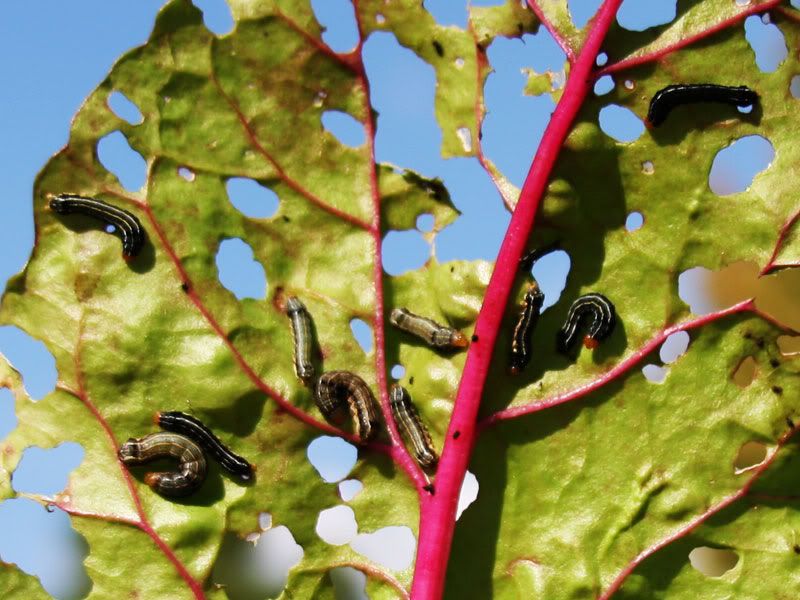
I have never seen so many creepy-crawly beasties on one square foot of greenery in my entire life. After my initial shock and disgust and a not-so-pleasant temper tantrum as visions of my Swiss chard and mushroom quiche faded quickly, I grabbed a bucket and started ripping off leaves that were heavy with these nasty-looking caterpillar things and stuffing them in the bucket.

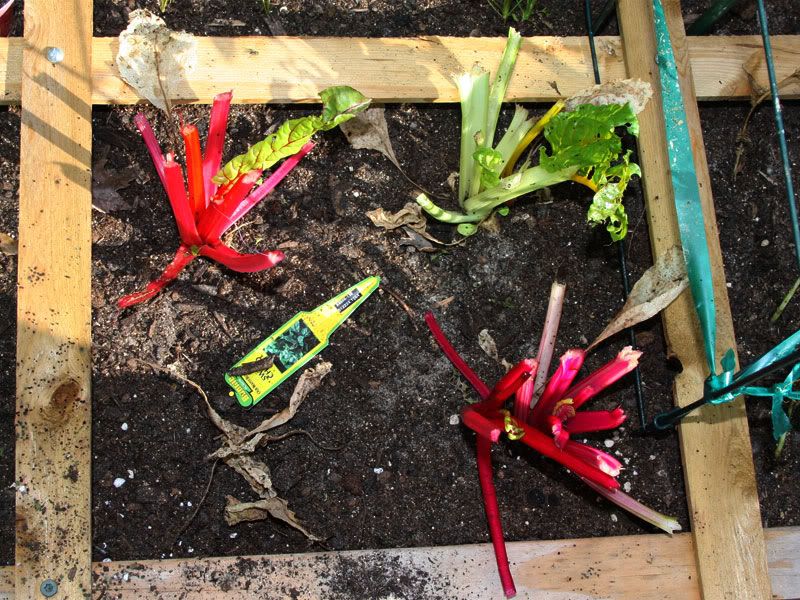
When I was done, I didn't have any plants left. Nothing was worth saving because the leaves had more holes than green and more bug poop than I cared to wash off. I assume I need to pull these plants and discard them. Luckily I have a couple of Swiss chard plants in the other box that seem to be bug-free…so far. I think I'll spray them with BT tomorrow just to be on the safe side.


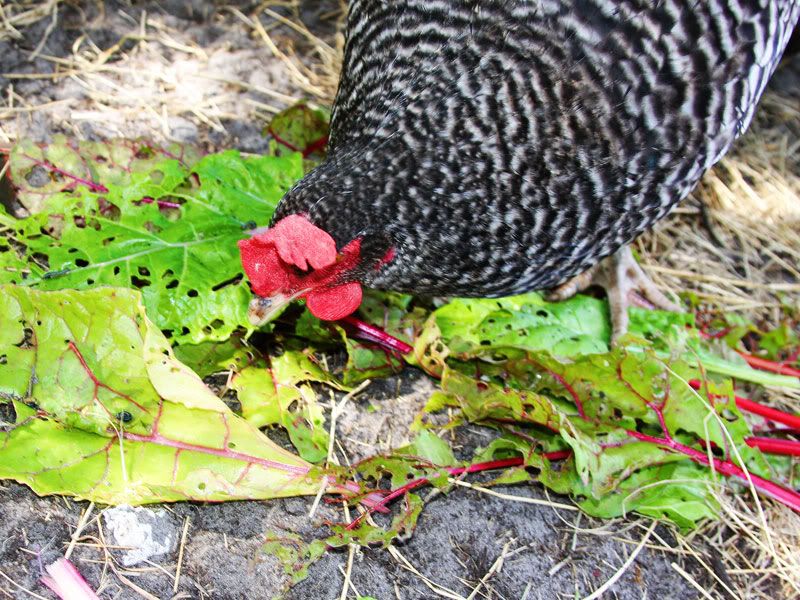
I figured the way to make me feel better about this was to dump the buggy chard in the chicken run and let them slaughter the little buggers and eat the holey leaves. My youngest son and I dumped two bucketfuls of Swiss chard and caterpillars into the run and the chickens went to town. Poor Clementine missed out on the feast because she was busy laying an egg. Maggie and Sookie don't believe in waiting and politeness and left her with nothing by the time she waddled out.


Later on in the afternoon I found three of the bugs on my radish greens so I pulled the remaining radishes, that were overdue anyway, and gave the radish greens to Clementine who was finished with her egg and indignantly waiting for her buggy treat.

I looked up the bugs in my organic gardening book and they might be Fall armyworms. Shudder. I'm not down with bugs and any kind of worm gives me the creeps. Wouldn't you know they show up and eat my chard the ONE week I left the garden alone?

So apparently my Swiss Chard tasted great…or so the chickens and caterpillars lead me to believe.

Monday, August 10, 2009

The Great Sunflower Project - My 1st report

I was very excited to participate in the Great Sunflower Project when I first heard about it, and as I mentioned on this blog, eagerly signed up the minute I learned about it. I planted my sunflowers, fully confident that they'd grow because growing sunflowers in Florida takes about as much skill as growing weeds.

And then they didn't grow.

After all that rain I assume the seeds or roots just got waterlogged and the tiny seedlings never grew after they sprouted.


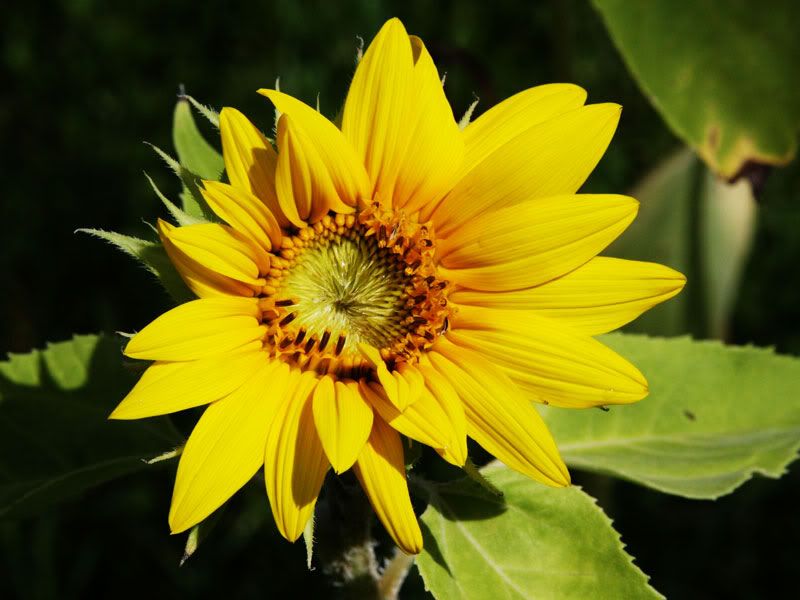
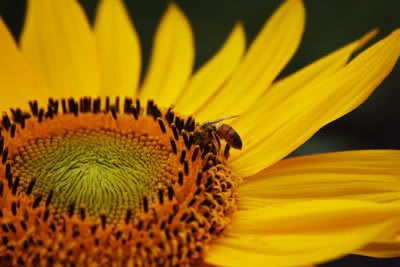
But after several weeks in a post-flood stasis, they picked up again and recently bloomed. Granted I only have three of them and only 1 has fully opened. And they're stunted and small and far from the Mammoth sunflowers I've grown before. But they're alive and they're attracting bees!


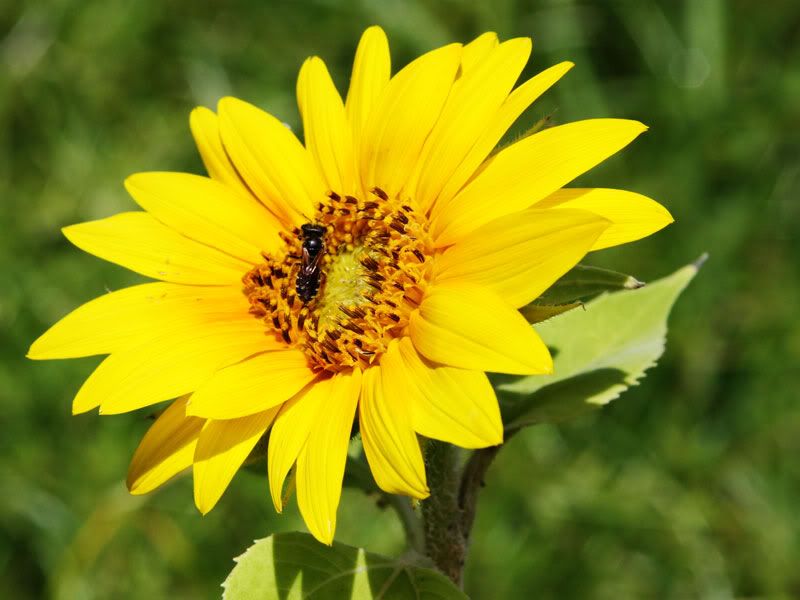
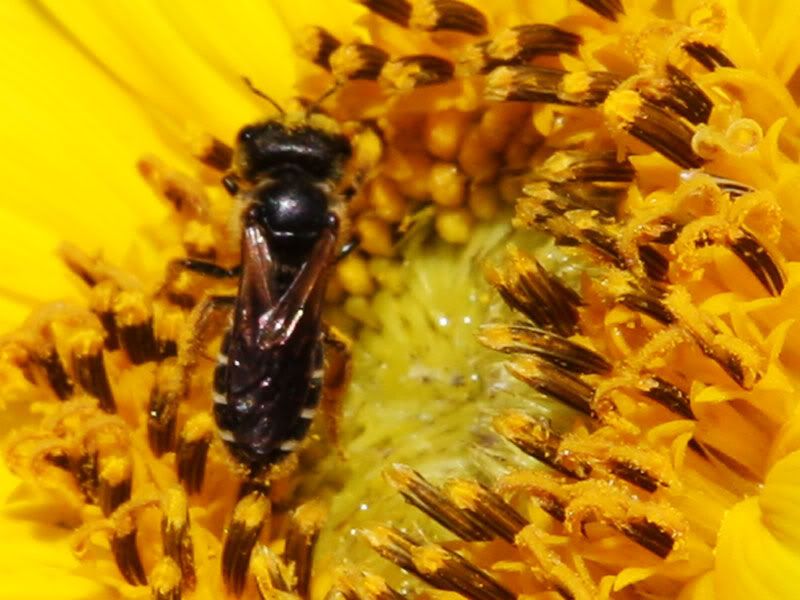
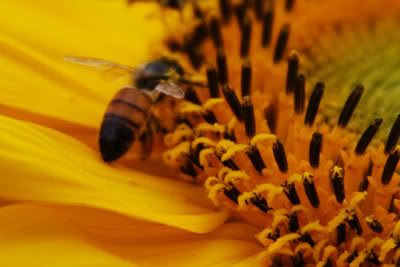
I was quite excited to sign in to the site and actually enter in some bee information, but then it asked for the type of bee and I had to select "I don't know" from the drop-down menu. The options were bumble bee, osmia, honey bee, carpenter bee, green bee and I don't know. I am far from an insect expert and can only assume this little guy is indeed a bee. I can recognize a big furry bumblebee, but when they're not obvious I'm not entirely sure about bees, wasps and bee-mimicking flies.


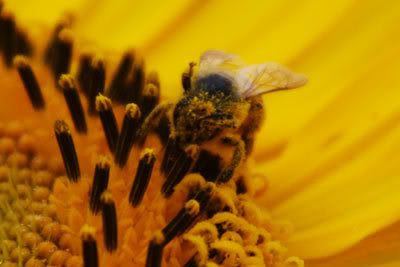
Any thoughts on this little guy? His head is covered in pollen so I assume he's a bee. He's got a striped body, so that gives off a bee vibe. His wings are folded on his back. Again, a bee trait. Could he be a carpenter bee maybe? He was pretty small, but definitely felt bee-like to me.

So even though my summer garden has been a failure - again - at least I'm somewhat able to participate in the Great Sunflower Project, which was one of my big summer gardening goals.

Wednesday, May 27, 2009

The Great Sunflower Project

About a week before the rains came and my garden fell victim to the deluge, I planted a row of Mammoth Sunflowers next to my row of Jack Be Little Pumpkins. I was really looking forward to having tall beautiful sunflowers to brighten up the garden, and once they dried out I planned on throwing them in the chicken run to let the girls eat the leftovers. Not only do I like sunflowers, but I planted them to do my part in the Great Sunflower Project.


Professor Gretchen LeBuhn, a San Francisco State University biology professor, is signing up citizen researchers for the Great Sunflower Project, a program in the United States and Canada that aims to assess the health of bee populations, some of which are collapsing. Volunteers agree to plant one of bees' favorite flowers, namely sunflowers, and record how often the bees visit.

Bees are a lot more important to the welfare of our planet than many people realize. No bees means no pollenization, which means the disappearance of certain plant species, which in turn means the disappearance of certain animal species. And if we're all connected…what does that mean for us? It turns out that the reason for the disappearance of many bee species is complicated, but it can't be argued that man has a huge hand in the decline of the bees - specifically all of the pesticides we use to kill the bad bugs that have done a number on the good bugs as well. Plus there's global warming and the eradication of a lot of natural areas due to building that hasn’t helped either.


But enough about my soapbox and more about the project. If you're a gardener you owe it to the little pollinating bees to sign up with the Great Sunflower Project online. Just go to www.greatsunflower.org/ and sign up. It's completely free and they'll even send you a packet of sunflower seeds to get you started. Once you sign up you fill out an online form all about your garden. It's quite detailed and you'll need to say what part of the country you live in, what type of area you live in, what size your garden is, etc. Then there is a form to record the comings and goings of the bees that visit your sunflowers along with a detailed how-to sheet for participants.

If you're not a gardener, but you have some big pots and a sunny spot, you've got what it takes to plant some sunflowers. They'll grow like mad this summer and you'll have something pretty to look at and you're doing your part to help with the Great Sunflower Project.

If you're interested in the decline of bees you can find a lot of information online. You'll find out pretty quickly that it's a worldwide problem with websites from almost every country abuzz with information about declining bees. Here are some articles from a French website, an Australian website and an English website, all of which are pretty darned depressing if you ask me. It's no secret that I'm a bit of a tree hugger when it comes down to it, so hearing about the decline of a species, especially one this important, just makes me sad.

I think all of us owe it to the bees to take part in this project and see if we can help researchers shed some light on what is happening with bees across the United States. If I can grow sunflowers and attract bees, anyone can!

Wednesday, November 5, 2008

A Bee Story

I'm quite captivated by non-gross insects and having our garden has helped that interest grow. Today I watched a bee collecting pollen from one of our sunflowers and although I know people have seen this a million times, it was fascinating to watch through the lens of my camera.

The bee was using his front legs to grab pollen and pile it up on his head. He really piled it on and seemed to smash it up there like a big yellow hat.He was wiggling his back end to fill his legs with pollen and his legs looked really heavy with fluffy yellow balls. He made sure to fully circle the center of the flower and seemed quite intent on getting a bit of pollen from each part of the disc.
He even flew around a few times and dropped little pieces of pollen off his back legs in flight.
If our garden has taught me anything so far, it's to stop and appreciate the small stuff. I hate being cliché, but it's true. Without a garden I would never have discovered the beauty of dragonflies, the grossness of tomato hornworms or the fascination of a bumble bee at work. So even if we don't grow anything edible from this garden, at least we've gained something from it: a little appreciation of the small things in life.

Monday, October 27, 2008

What's That Bug?

When Monday rolls around and you're in a post-weekend daze, you post some pretty gardening photos and call it a day.
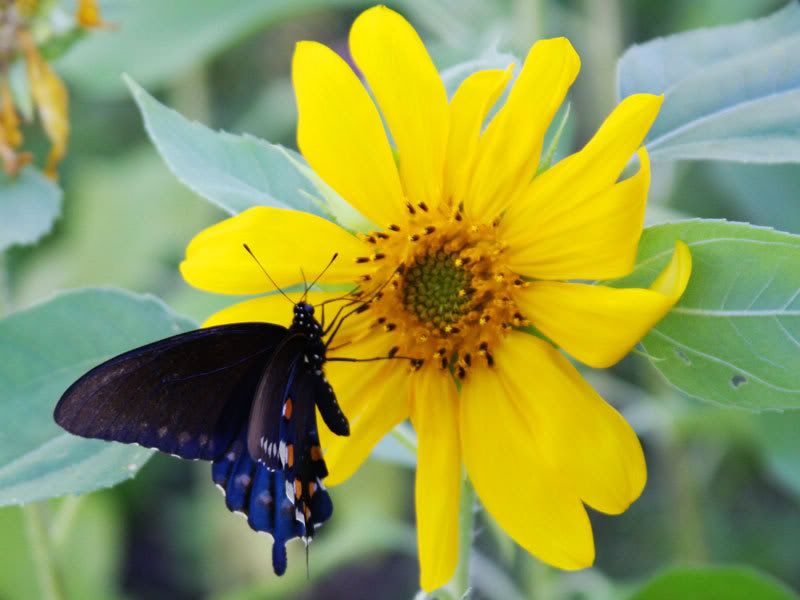
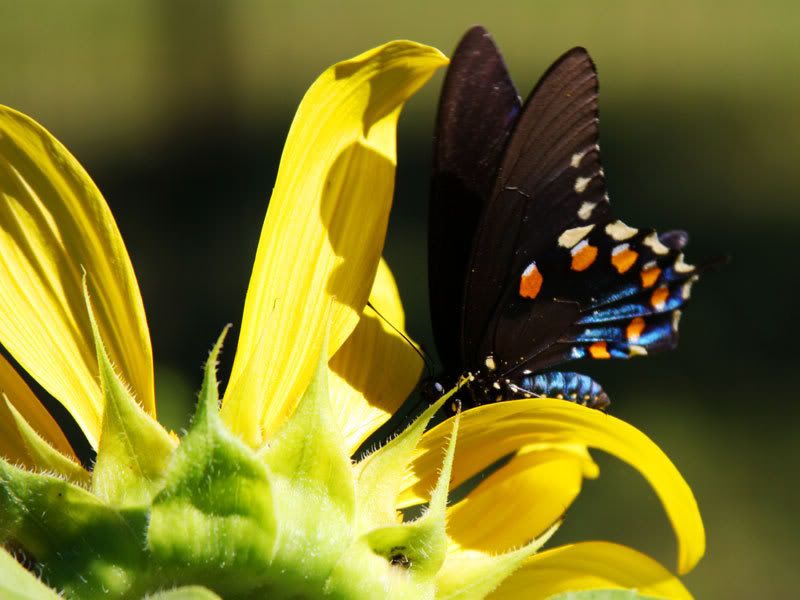
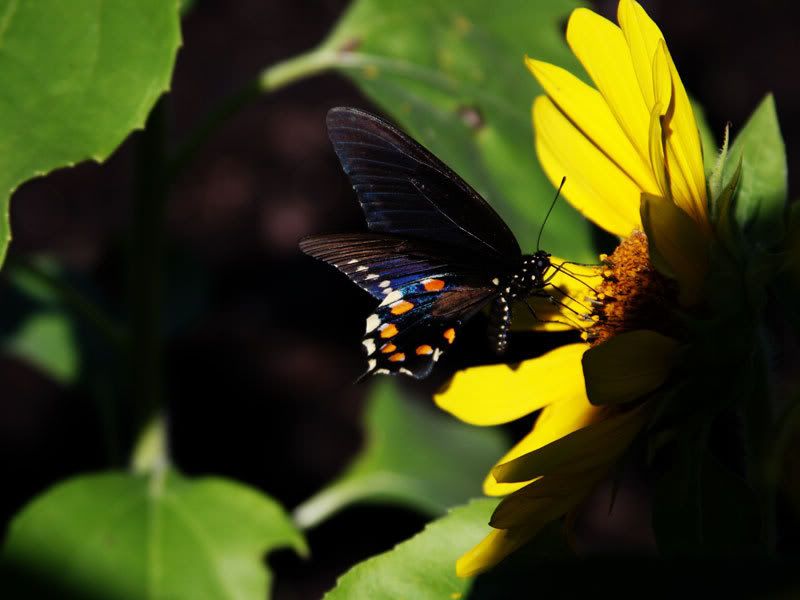
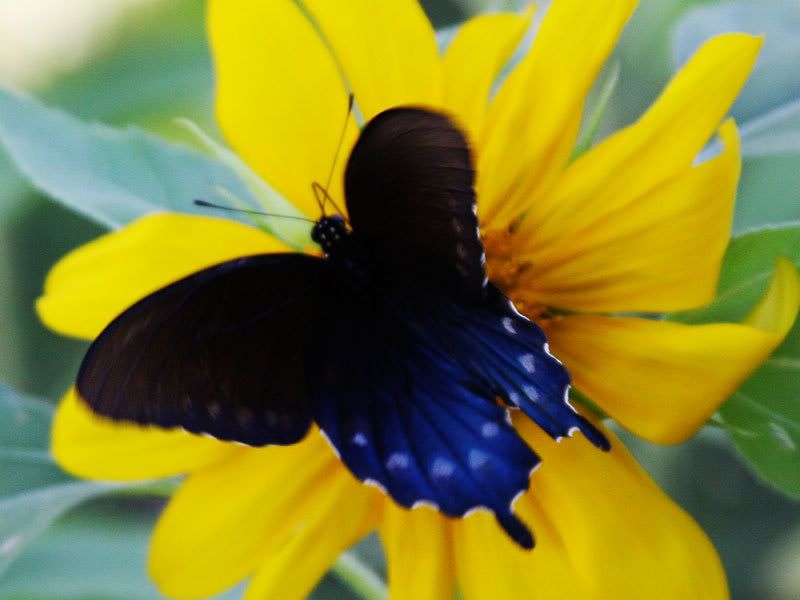
Yesterday I was in the garden looking at my very stunted sunflowers when I noticed a black and blue butterfly darting around the garden. I came inside and decided to look up what kind of butterfly he was since I'd never seen a black and blue one before. I had tons of things to do on Sunday afternoon but spent entirely too much time searching for this butterfly online. I very easily obsess over things and searching for what type of butterfly I had just seen completely overtook me.
It turns out that it's hard to look up what kind of bug you've got if you don't have a clue where to start. I spent entirely too long searching for "blue black butterfly Florida" and the like with no answers.
It was then I decided to go to What's That Bug? for help. My friend Courtney has a daughter named Caity who's got a thing for bugs and I learned about the website from them. I searched the site and found nothing, so I decided to email them for help on the Ask What's That Bug page. You fill out information on your bug and where you saw it, then upload some pics and ask the experts.
Within an hour on a Sunday afternoon I got an email back from What's That Bug telling me that this butterfly is a Pipervine Swallowtail. I'm impressed and a little freaked out that someone was sitting by the What's That Bug? computer on a Sunday afternoon knocking out replies, but it worked out in my favor. So gardeners, if you have a creepy-crawly and you can't figure out what it is, What's That Bug? is the place to go. It turns out that the Pipervine Swallowtail is one of 10 species of swallowtail butterflies to be found in Florida. Anti-climactic as all get out huh? But at least I know what it is and I can focus on a new obsession for today.

Friday, October 3, 2008

Yard dragons

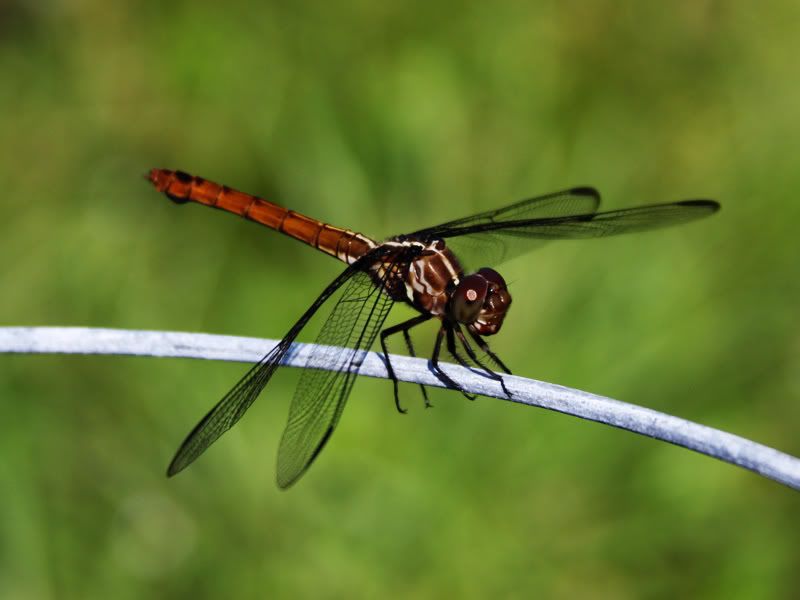
I've developed quite a nerdy interest in dragonflies since planting our garden. I'd never really spent much time noticing them before, but because they seem to love our garden, I spend entirely too much time watching them fly around the yard and land on our tomato cages. I have started to really enjoy photographing them too. Their wings look just like I imagined fairy wings when I was a kid with all the fine lines and shimmery color. In fact I learned that people have historically mistaken dragonflies for fairies. Fairy tales have been told of little people fluttering about worldwide that turned out to be dragonflies.

I never realized how brightly colored they are either. We seem to have bright pink, blue and brown ones as our regular visitors. I've already mentioned here how great dragonflies are for gardens and the environment, with their mosquito-eating appetite, so I'm always happy to see them.

The boys are quite fascinated with the dragonfly trivia we've uncovered - especially the fact that dragonflies were around during the time of dinosaurs over 300 million years ago. They really like the fact that there is a type of dragonfly in Costa Rica with a 7 1/2 inch wingspan. They're desperate to see that one.

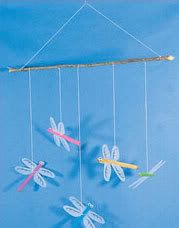
I found a really cool dragonfly craft that I'll do with the boys on our next free day. It's a fun dragonfly mobile from Highlights Kids. They love hanging stuff they make from sticks they find in the yard - this is right up their alley.

Thursday, October 2, 2008

Holy Hornworms

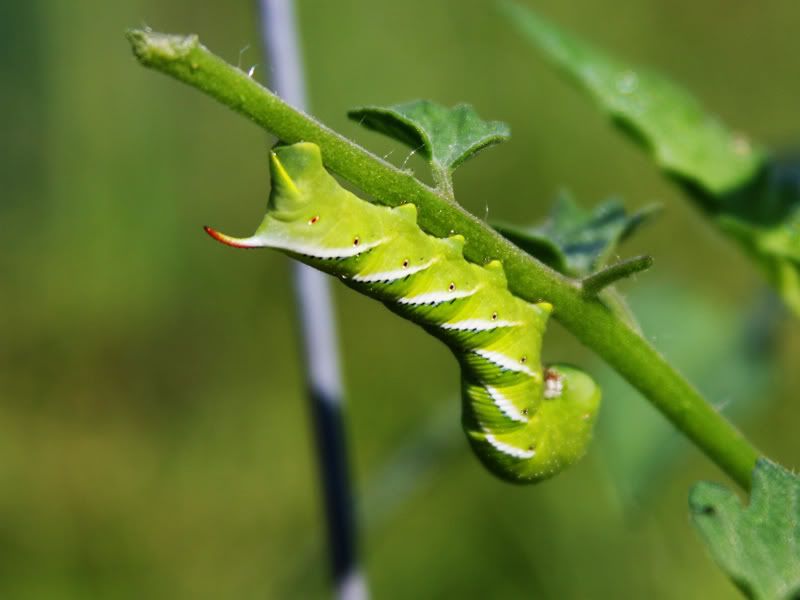
I was doing my morning plant inspection in the garden when I noticed a vile looking green creature hanging from the bottom of a branch on one of our tomato plants.

Next to this thing was a leaf with all these gross looking brown egg-things on it - which might also be some sort of insect poo. Blech! I took off that leaf, smashed it into our fence and tossed it far away into the neighbor's yard (he has no plants and he's a single guy so I knew he wouldn't care). Then we looked at the vile green creature and tried to figure out if it was good or bad for the plants.

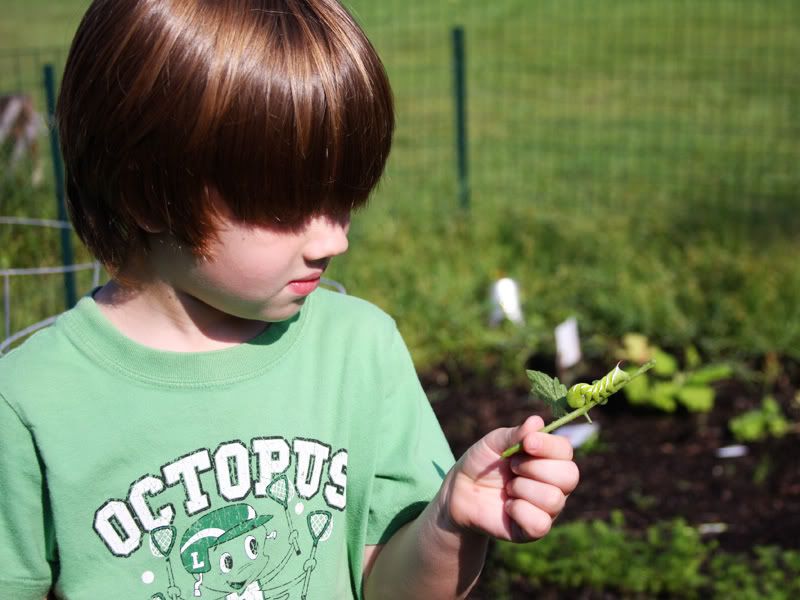
Farmer B decided it must be evil since the branch it was hanging from didn't have any leaves on it, so the green thing must have eaten them. We removed the branch from the plant and the boys spent a good bit of time oogling it.

Then came the whole "what do we do with this thing?" question. I didn't really want to step on it. The idea of its guts spewing out didn't appeal to me. So…we tossed it into the other neighbor's yard. This is a vacant house with no plants either. I realize we sound very un-neighborly, but our lots are about 2 acres and it just made us realize we need a plan for disposing of future garden beasties. Seriously what do you DO with a big green bug? Do gardeners really take the things to their front driveway and step on them? We will come up with a plan for future bug disposal because we realize that these creatures will probably just find a way back to our garden. We kept them very far away from a rear neighbor who actually has a vegetable garden, so we did try to do the right thing. Plus, stepping on it in front of the boys who were clearly amused by it seemed kind of wrong too.

Then I moseyed over to the pumpkin plant and found a small one of these disgusting things on a very-chewed up leaf. Now I wonder how many of these things are hidden in the garden?

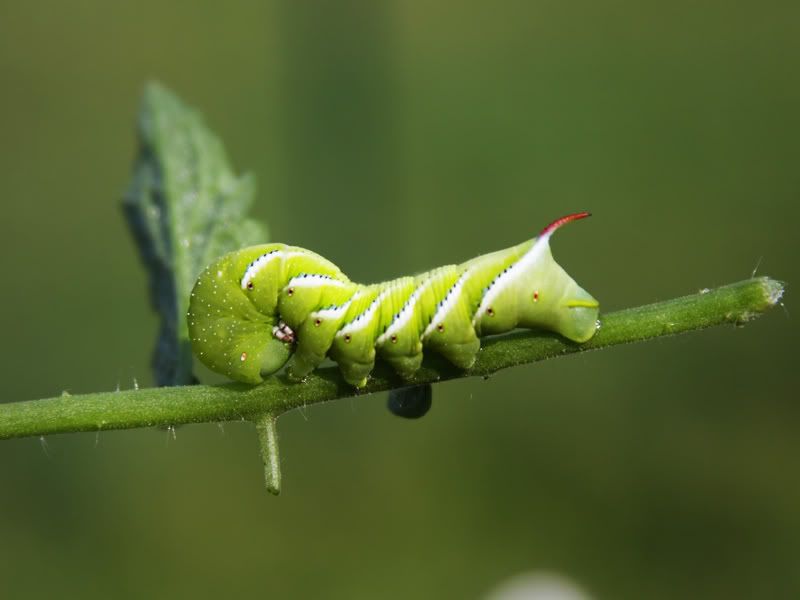
So we came inside and whipped out our Organic Gardening book and flipped through disgusting page after disgusting page until we found it. It's a Tomato Hornworm. I suppose this is extremely common to anyone who's had a garden before, but as you know, this is uncharted territory for us. Apparently these things burrow into the soil, so I wonder how we got them with a new garden? Maybe one of the moths flew over to our garden at some point? To get rid of them you're supposed to hand-pick them off (yuck) or get wasps to come and eat them. It says ladybugs do a number on them too. I'll work on the wasp brigade soon.

Wednesday, October 1, 2008

Gah! What is this bug?

The boys and I were out in the garden this morning inspecting the plants and taking photos when Jace screamed and yelled "BUG!" He pointed to this little beastie crawling up the garden fence. Then we found two more of them. I thought it might be a cucumber beetle, but it doesn't look like the cucumber beetles in my Organic Gardening Book (see it listed off there to the right on my Amazon list). It can't be good to have these in the garden. It realize it looks huge in the photo, but it's about the length of a fingernail.

So I'm stumped. I admit to being a bit girly when it comes to bugs. Just looking through the pages of creepy-crawlies in the book makes me itch and jump everytime a loose hair touches my arm. I do get quite squirmy around bugs, but I'm trying to be a Gardening Queen and suck it up and identify this bug.

Anyone know what it is?

And what I do about it?

Thursday, August 7, 2008

Hired Assassins

Our plants have been in the ground only a handful of days and already we have death on the horizon. Many of our plants appear to have 2 roots in the grave and we don't know what's causing it. Our cantaloupes, watermelons, zucchini and squash are yellowed and leafless - or have severely nibbled leaves. I went out at sunset and sunrise to find any guilty evil bugs, but found none. I spent enough time to search every single leaf, top and bottom, but didn't find anything suspicious.


In a panic, I consulted my garden expert friend, Caroline. She's an expert because she has a garden that is producing veggies, and she diagnosed us with a probable case of the dreaded cucumber beetle. She told me what sort of pesticide to buy and I called Farmer B immediately and had him pick up a bottle at Home Depot on the way home. I dashed out first thing this morning at sunrise and doused the garden with Pyrethrin, which is a pretty safe garden chemical as it turns out.


Later on I decided to take the boys to our local nursery to buy a large quantity of an organic pesticide so that we can do our best to save our dying little plot of plants. This nursery is so ridiculously unhelpful everytime we go. When I asked for a safe pesticide for our home vegetable garden, Mrs. Personality handed me a bottle of some sort of poison and said not to let the kids or dogs go near it. Um... no. I told her I wanted something organic or at least safe for them and she said that nothing organic works on garden pests. Yes, they're a real treat there.


She then talked me into buying a sack o' ladybugs. She said they're a good natural method of pest control. I'm convinced that they keep them around just to placate the earth-loving hippie freaks that come in and scoff at their chemicals.Well it worked because I bought a bag. As I'm walking out they tell me not to leave them in the car since it's so hot, but to go straight home at put them in the fridge so they can sleep. I had two more stores to go to and the prospect of cooking this $10 bag of ladybugs in my car didn't appeal to me. So I dumped out all of the contents of my purse into a canvas grocery bag and put the ladybugs in my purse. Yes, I spent the morning shopping around Michael's and Target with a purse full of ladybugs - 1,800 to be exact.

You'll be happy to know they're in the fridge now. After sunset I'm supposed to release them in the garden while bellowing out my best rendition of "Born Free." Apparently they don't fly in the dark and they'll just crawl around on our stubby half-dead plants and lay eggs. The eggs will hatch and the babies will eat some of our evil bugs. So ladybugs are garden assassins. Who knew?

Wednesday, August 6, 2008

Trouble in paradise

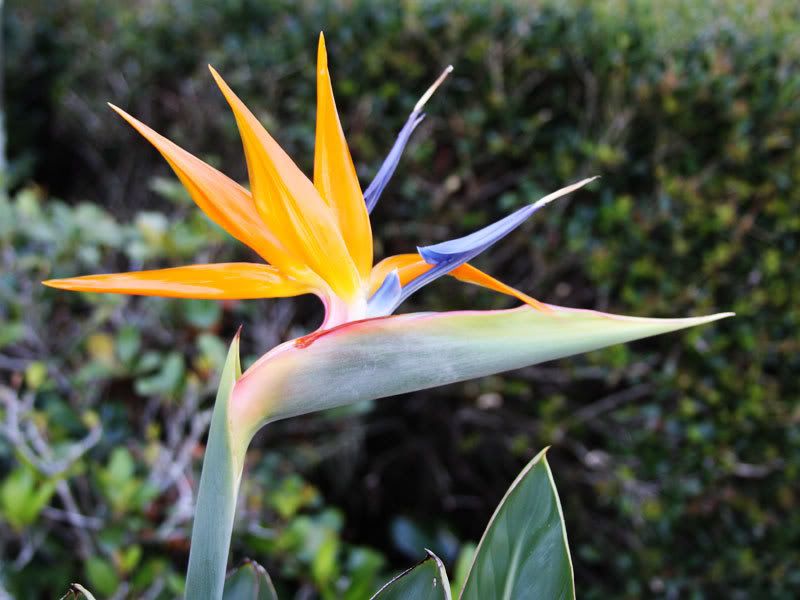
When we moved into our house about 6 years ago there was very simple landscaping out front. Simple is perfect for us. We've never done much to it and I couldn't tell you the names of any of the bushes or plants growing out there, but they're obviously hardy since we've lived here 6 years and they don't look much different than when we moved in. There are two green long-leafed plants that have looked pretty bedraggled for years. I assumed they were just regular plants - nothing special. Then I woke up this morning to find this:


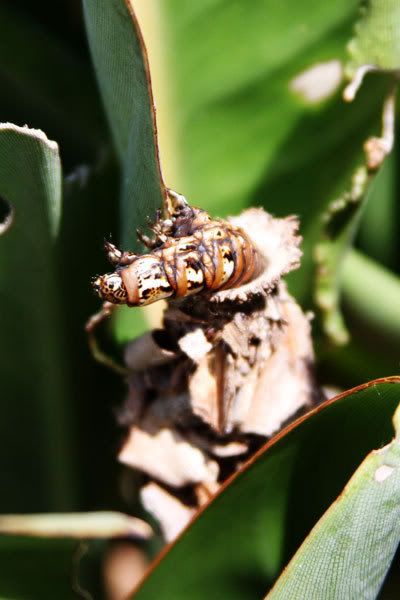
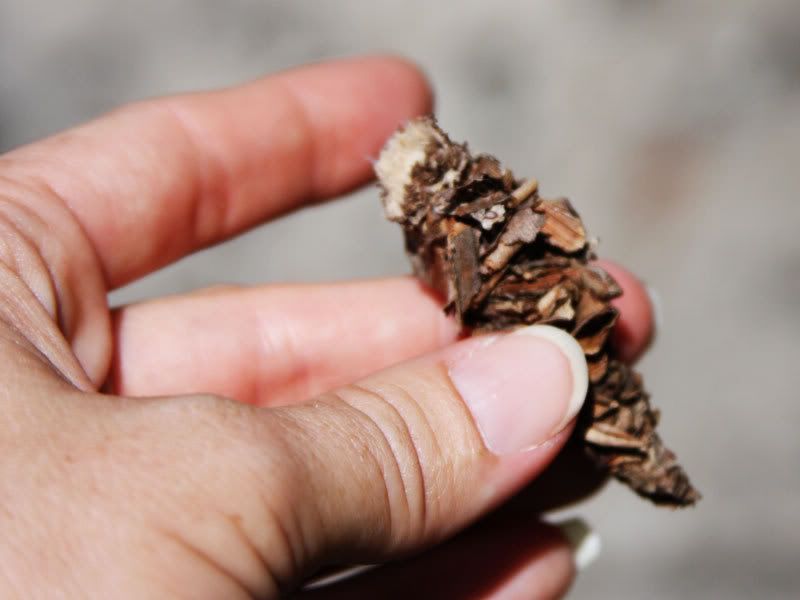
A bird of paradise! Who knew? And we have two of them. The one that just bloomed looks quite healthy, but the other one is very holey and eaten up. I have glanced at it in the past to see if there are any obvious little garden beasties that are eating it, but never found a thing. Then today my 4-year-old found the guilty creature chomping away. It was very disgusting. It turns out that these are the mystery creatures that we've seen attached to the stucco all over the front of our house for years. They live in little stick-covered cocoons and they stick onto any surface with a hold tighter than superglue. We never knew what they were, but after we caught one eating our bird of paradise plant today I decided to go online and figure out what it is. ((shudder))
I am not a fan of gross wormy creepy-crawly things. So the fact that these are all over the front of our house makes me shudder and itch. Turns out they are called bagworms. I discovered that female bagworms stay in their cocoons that they make out of stick and plant pieces and walk around with it like a hermit crab in a shell. When frightened, they retreat into their cocoon. They poke out their head and wander off when the coast is clear. The females lay eggs in their cocoon, which eventually hatch and she dies. The males eventually turn into moths and fly away. They have no beneficial use to plants or gardens and are just listed as a pest. The whole thing is bound to make me break out in hives just thinking about it.
The only way to get rid of bagworms is to hand-pick them off (ewwww) and burn them, or to spray them with a pesticide called BTK, which will also kill off your good caterpillars too. But I read that they can be immune to the pesticide depending on the stage in their development when you spray them. These things are all over the front of our house - hand picking them off while balancing on a tall ladder would be gross and insanely time consuming. Farmer B has tried to pull them off the stucco before their hold is so tight that you'd think he's trying to pry a nail out of a board. If anyone has any suggestions for us, we're up for them.

Ugh. I can't stop itching.

Tuesday, July 29, 2008

Back from vacation, grasshoppa!

The boys and I just returned from a long weekend away visiting the grandparental unit in Southwest FL. Farmer B had to stay home to work, but managed to get a snazzy photo of all the flooding in our yard caused by the torrential rains we've been getting lately (see blurry camera phone pic of our new lakefront property). We definitely missed him, but made the most of a long weekend without him.

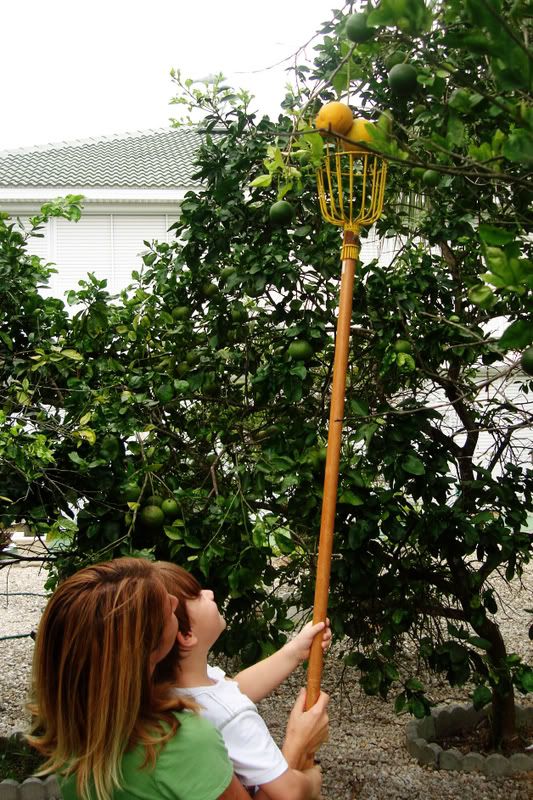
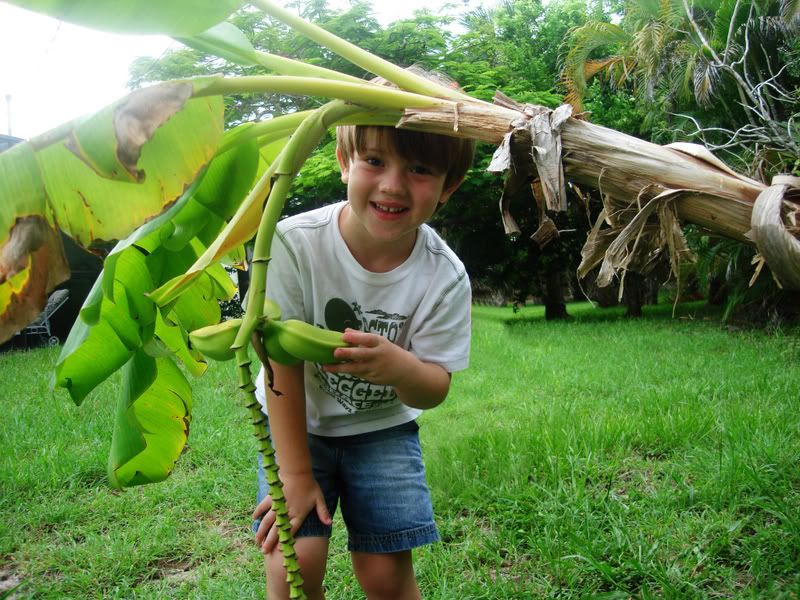
We managed to have some fun in my mom's back yard. Their house is one of those wonderful houses that is graced with citrus trees that keep producing fruit no matter how many hurricanes flatten them and how much they are left to their own devices. They have several orange trees, a grapefruit tree, some banana trees and a lemon tree that grows enormous lemons. All of these trees have been overwhelmed by salt water on many occasions, thanks to hurricanes and tropical storms, yet still keep growing strong and producing fruit. (This bothers me because our orange tree is a black stick of death and our local nursery blamed us for not taking good enough care it.) Most of the fruit on my mom's trees are quite green right now and not ready to be picked, but Aidan insisted on using a citrus picker to get the oranges on the top of mom's tree, even though they were from last season and were drier than sandpaper. A long-handled citrus picker is a handy little contraption for people with big fruit trees, but apparently it only works if you're at least 4 feet tall.
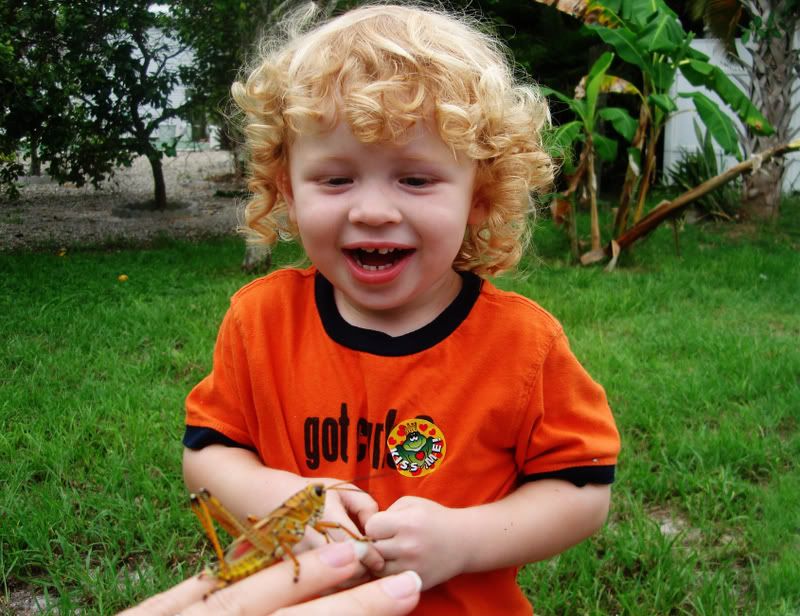
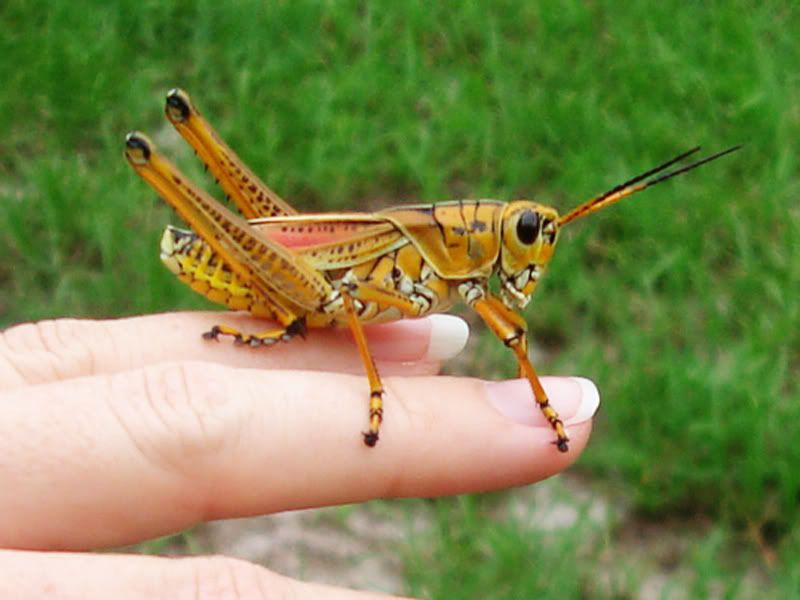
We then found an Eastern Lubber grasshopper to play with. I am not a fan of bugs, but have played with Eastern Lubbers since I was a kid. I remember that we’d grab one and chase another kid around the schoolyard with it in our hand and try to make it "tobacco spit" on another kid. This spit stains clothes, so it was good fun. Now I look back and realize it was quite mean, but we never really hurt any of the grasshoppers, and a small brown stain on a Van Halen concert t-shirt couldn't have ruined a kid's life either. That tobacco spit is actually regurgitated recently-consumed plant material that they spit out with a big hiss as part of their defense mechanism. They look like a drunk redneck with a wad of Skoal when they get mad.
We were very gentle with this grasshopper, so we have no tobacco spit incidents to report on. The boys were both disgusted and intrigued by this slow moving creepy crawly and they perfected their girly squeal - all good times. Enjoy these photos of their first experience with a big tobacco-spittin' grasshopper.


Blog Widget by LinkWithin