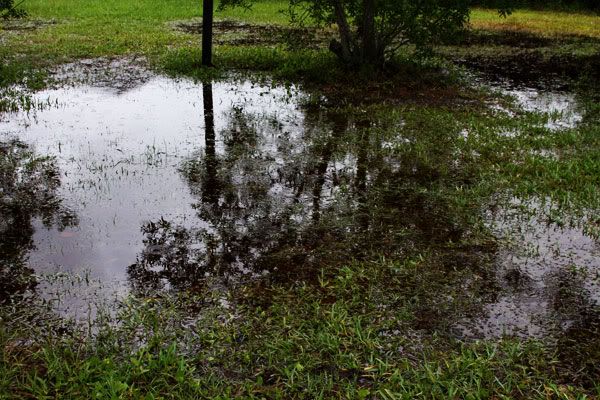
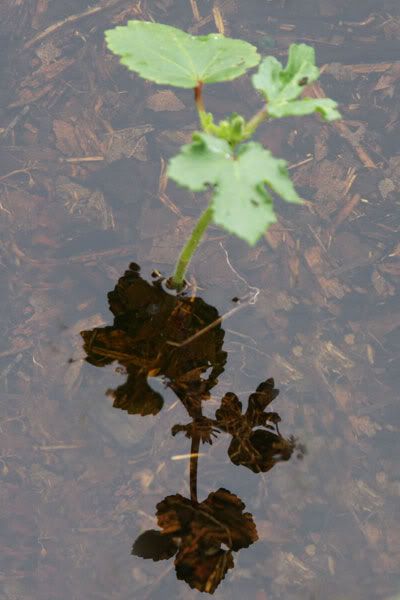
About a week before the rains came and my garden fell victim to the deluge, I planted a row of Mammoth Sunflowers next to my row of Jack Be Little Pumpkins. I was really looking forward to having tall beautiful sunflowers to brighten up the garden, and once they dried out I planned on throwing them in the chicken run to let the girls eat the leftovers. Not only do I like sunflowers, but I planted them to do my part in the
Great Sunflower Project.
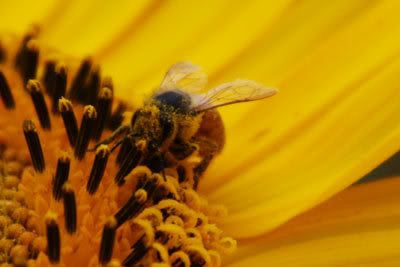
Professor Gretchen LeBuhn, a San Francisco State University biology professor, is
signing up citizen researchers for the
Great Sunflower Project, a program in the United States and Canada that aims to assess the health of bee populations, some of which are collapsing. Volunteers agree to plant one of bees' favorite flowers, namely sunflowers, and record how often the bees visit.
Bees are a lot more important to the welfare of our planet than many people realize. No bees means no pollenization, which means the disappearance of certain plant species, which in turn means the disappearance of certain animal species. And if we're all connected…what does that mean for us? It turns out that the reason for the disappearance of many bee species is complicated, but it can't be argued that man has a huge hand in the decline of the bees - specifically all of the pesticides we use to kill the bad bugs that have done a number on the good bugs as well. Plus there's global warming and the eradication of a lot of natural areas due to building that hasn’t helped either.
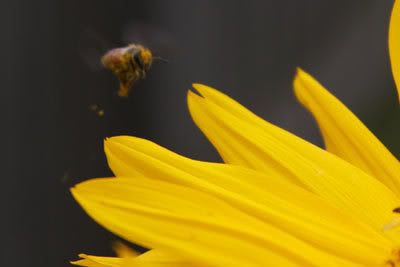
But enough about my soapbox and more about the project. If you're a gardener you owe it to the little pollinating bees to sign up with the
Great Sunflower Project online. Just go to
www.greatsunflower.org/ and sign up. It's completely free and they'll even send you a packet of sunflower seeds to get you started. Once you sign up you fill out an online form all about your garden. It's quite detailed and you'll need to say what part of the country you live in, what type of area you live in, what size your garden is, etc. Then there is a form to record the comings and goings of the bees that visit your sunflowers along with a detailed how-to sheet for participants.
If you're not a gardener, but you have some big pots and a sunny spot, you've got what it takes to plant some sunflowers. They'll grow like mad this summer and you'll have something pretty to look at and you're doing your part to help with the
Great Sunflower Project.
If you're interested in the decline of bees you can find a lot of information online. You'll find out pretty quickly that it's a worldwide problem with websites from almost every country abuzz with information about declining bees. Here are some articles from a
French website, an
Australian website and an
English website, all of which are pretty darned depressing if you ask me. It's no secret that I'm a bit of a tree hugger when it comes down to it, so hearing about the
decline of a species, especially one this important, just makes me sad.
I think all of us owe it to the bees to take part in this project and see if we can help researchers shed some light on what is happening with bees across the United States. If
I can grow sunflowers and attract bees, anyone can!


 Posts
Posts